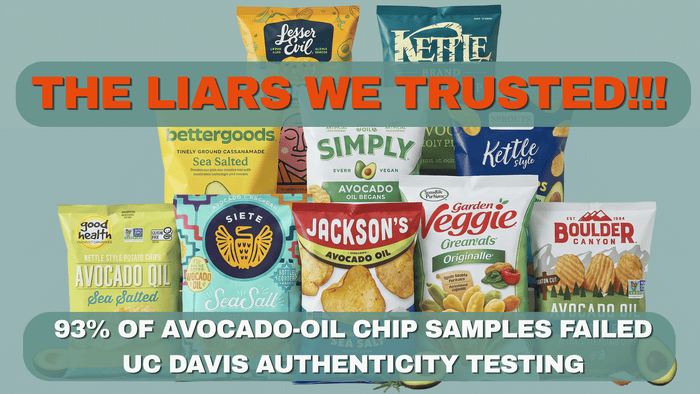
Most people do not deliberately choose to consume added sugar, industrial seed oils, artificial colors, preservatives, emulsifiers, and other food additives. They buy bread, cereal, salad dressing, protein bars, frozen meals, sauces, snacks, and bottled drinks.
The unwanted ingredients are already inside them.
One exposure may appear insignificant. The problem is repetition. You eat the same ingredients at breakfast, lunch, dinner, and every snack in between. You may consume them every day for decades.
Detox is not only about what you remove from your body. It is also about what you stop putting into it.
Key Takeaways
Your Grocery Cart Is an Exposure List That Turns Your Body Into A Parasite Haven!
Turn over almost any packaged product and read the ingredients.
A typical grocery cart may contain:
- Added sugars
- Refined flour
- Modified food starch
- Maltodextrin
- Soybean oil
- Canola oil
- Corn oil
- Artificial flavors
- “Natural flavors”
- Artificial colors
- Sodium benzoate
- Potassium sorbate
- Sodium nitrite
- Monosodium glutamate
- Mono- and diglycerides
- Polysorbate 80
- Carrageenan
- Cellulose gum
- Xanthan gum
- Artificial sweeteners
- Preservatives
- Emulsifiers
How much are you consuming? How often are you consuming it? Why is it in the food? What happens when several processed ingredients are consumed together every day?
The food industry uses these ingredients to make products cheaper, sweeter, softer, more colorful, easier to ship, and more difficult to stop eating.
That does not necessarily make the food better for your body.
Sugar Is Hidden Under Dozens of Names
Sugar is rarely limited to the word “sugar.”
Manufacturers can use several different sweeteners in one product. Dividing the sugar between different ingredients may also prevent any one sweetener from appearing first on the ingredient list.
Learn these names:
- Sugar
- Cane sugar
- Organic cane sugar
- Evaporated cane juice
- Brown sugar
- Beet sugar
- Raw sugar
- Turbinado sugar
- Demerara sugar
- Powdered sugar
- Confectioner’s sugar
- Sucrose
- Glucose
- Dextrose
- Fructose
- Crystalline fructose
- Maltose
- Invert sugar
- Corn syrup
- Corn syrup solids
- High-fructose corn syrup
- Glucose syrup
- Rice syrup
- Brown rice syrup
- Tapioca syrup
- Barley malt syrup
- Malt syrup
- Cane syrup
- Agave nectar
- Honey
- Molasses
- Maple syrup
- Date syrup
- Coconut sugar
- Corn sweetener
- Fruit juice concentrate
Organic sugar is still added sugar. Raw sugar is still added sugar. Honey, agave, maple syrup, and concentrated fruit juice still deliver concentrated sugar.
The name may sound natural. Your body still has to process it. Raw Local Honey, Date sugar, Monk Fruit powder, or maple syrup are better options if you love sweets.
Organic Sugar Is Still Added Sugar
What About Maltodextrin?
Maltodextrin deserves special attention because it can confuse label readers.
Maltodextrin is produced by breaking starch into smaller carbohydrate chains. It is technically classified as a starch rather than a simple sugar, but it can be digested rapidly and raise blood glucose.
This means a product can contain maltodextrin even when the Nutrition Facts panel shows little or no sugar.
Maltodextrin is commonly found in:
- Seasoning packets
- Chips
- Protein powders
- Meal-replacement products
- Sports drinks
- Powdered drink mixes
- Sauces
- Candy
- Low-fat foods
- Sugar-free products
- Supplements
Do not stop reading after the “Added Sugars” line. Read the complete ingredient list.
FDA guidance also recognizes that mono- and disaccharides created through the hydrolysis of ingredients such as maltodextrin and corn syrup may need to be declared as added sugars. The labeling rules are more complicated than most shoppers realize. Read the FDA guidance.
Sugar May Physically Cut Your Arteries
You may have heard that sugar acts like broken glass inside your arteries. Sugar does not physically slice an artery. The real process is more complicated but still serious.
Repeated high blood sugar can contribute to:
- Insulin resistance
- Elevated triglycerides
- Oxidative stress
- Chronic inflammation
- Damage to blood-vessel walls
- Reduced vascular function
- Type 2 diabetes
- Increased cardiovascular risk
- Excess added sugar can contribute to blocked arteries
High blood sugar can promote inflammation and damage blood vessels over time. That damage can create conditions that make fatty plaque more likely to develop.
Arterial blockage does not have only one cause. Smoking, high blood pressure, diabetes, abnormal cholesterol particles, inflammation, inactivity, and other factors can contribute.
Seed Oils Are Hiding in Everyday Foods
Seed oils are not found only in deep fryers.
They are used in bread, crackers, mayonnaise, salad dressing, sauces, frozen meals, restaurant food, protein bars, plant-based foods, roasted nuts, and products advertised as healthy.
Watch for:
- Soybean oil
- Canola oil
- Corn oil
- Cottonseed oil
- Sunflower oil
- Safflower oil
- Grapeseed oil
- Rice bran oil
- Generic vegetable oil
- Vegetable oil blends
A product may say “made with olive oil” on the front while containing mostly soybean or canola oil. The front of the package is advertising. The ingredient list tells you what you are actually buying.
Ingredients are generally listed by weight. If soybean oil appears before olive oil, the product likely contains more soybean oil than olive oil.
The Front of the Package Is Advertising
Zero Tolerance Means Reading Every Label
If your goal is to eliminate added sugar and industrial seed oils, occasional exceptions can keep turning into regular exposure.
“It is only one meal.”
“It is the weekend.”
“It is a birthday.”
“It is the holiday season.”
“It is only a small amount.”
The body does not recognize holidays. It processes what you consume.
A zero-tolerance standard is a personal dietary choice, not a rule that everyone must follow. But it eliminates confusion. The ingredient is either present or it is not.
This does not mean avoiding whole fruit because fruit naturally contains sugar. Whole fruit also contains water, fiber, minerals, and plant compounds. Added sugar and the sugar contained inside an intact piece of fruit are not the same dietary package.
The primary target is concentrated sugar added to processed food and drinks.

It’s Also in the Water
Food is only one part of daily exposure. Water deserves the same attention.
Many people assume bottled water is automatically cleaner than tap water. A sealed plastic bottle and a picture of a mountain do not prove purity.
A study of 101 bottled-water products sold in the United States detected PFAS in some products. PFAS are persistent manufactured chemicals used in numerous industrial and consumer applications. They break down very slowly and have been detected throughout the environment. Read the bottled-water PFAS study.
Another study tested six bottled natural spring-water sources for metals. Silver, arsenic, barium, cadmium, cobalt, chromium, copper, molybdenum, nickel, lead, antimony, selenium, vanadium, and zinc were detected in at least one source.
The concentrations did not exceed federal or California maximum contaminant levels. However, arsenic exceeded California public-health goals in all six sources. That does not mean every bottled water is dangerous. It means “bottled” does not mean “free from contaminants.” Read the bottled spring-water study.
Bottled Does Not Mean Free From Contaminants
Know What Your Water Filter Actually Removes
A basic refrigerator or pitcher filter may improve taste without removing the specific contaminants that concern you.
Do not buy a filter based only on words such as:
- Pure
- Clean
- Natural
- Advanced
- Premium
- Multi-stage
Look for independent certification and a specific contaminant-reduction claim.
Reverse Osmosis
Reverse osmosis, or RO, forces water through a specialized membrane. Depending on the system and certification, it can reduce many dissolved contaminants.
For PFAS reduction, look for certification under:
- NSF/ANSI Standard 53
- NSF/ANSI Standard 58
Do not assume every RO system removes every contaminant. Check the certification and performance data for the exact model.
Distilled Water
Distillation boils water and collects the condensed steam. According to the CDC, distillation can remove contaminants including arsenic, barium, cadmium, chromium, lead, nitrate, sodium, sulfate, calcium, magnesium, and many organic chemicals.
Test Instead of Guessing
The correct filtration system depends on what is in your water.
Take these steps:
- Find your local water-quality report.
- If you use a private well, have the water tested.
- Identify the contaminants you want to reduce.
- Purchase a treatment system certified for those specific contaminants.
- Replace filters and membranes on schedule.
- Clean the system according to the manufacturer’s instructions.
- Retest the water when appropriate.
A neglected filter can stop performing as intended. Buying the system is only the first step.
Being Vigilant
Reading labels is the beginning. Changing your daily habits is where the real work starts. Know your food and filter your water.
Join the Boost Blenz 90-Day Detox and Continue your education with Food As a Weapon, part of our Food Freedom Series. These books explain how harmful ingredients became normalized, where they hide, and how to make more informed decisions about your food and health.