93% of Avocado-Oil Chip Samples Failed UC Davis Authenticity Testing
Key Takeaways
People have been trying to clean up their diets.
They started reading labels.
They started avoiding heavily processed ingredients.
They started paying more for foods made with avocado oil instead of cheaper vegetable oils.
Companies noticed.
Suddenly, avocado oil was everywhere.
Potato chips. Tortilla chips. Mayonnaise. Salad dressing.
The words “Made With Avocado Oil” became a selling point.
Consumers paid a premium because they believed the label.
Then UC Davis tested the products.
The results were terrible.
Researchers tested 54 commercially available processed foods labeled as containing avocado oil.
48 of the 54 avocado-oil products failed authenticity testing.
That is 89%.
Among avocado-oil chips, 26 out of 28 samples failed.
That is 93%.
This was not somebody on social media looking at ingredient labels.
Researchers extracted the oils from the finished foods and analyzed their fatty-acid and sterol profiles, the chemical fingerprints scientists use to determine whether an oil is compositionally consistent with authentic avocado oil. They even allowed approximately a 10% margin for natural variation. The overwhelming majority still failed.
That should make every American who reads food labels angry.
Siete Failed. Boulder Canyon Failed.
The brand-by-brand information released with the research is where this story becomes personal.
Two lots of Boulder Canyon Avocado Oil Classic Sea Salt Kettle Style Potato Chips were tested.
Neither was marked as compositionally consistent with authentic avocado oil.
Siete was tested too.
Two lots of Siete Kettle Cooked Sea Salt Potato Chips Made with Avocado Oil were tested.
Neither passed.
Two lots of Siete Maiz Sea Salt Corn Tortilla Chips Made with Avocado Oil were tested.
Neither passed.
And those were not isolated examples.
The tested avocado-oil products from Kettle Brand, Jackson's, Sprouts, Sensible Portions, Bettergoods and Good Health also included lots that were not compositionally consistent with authentic avocado oil.
Meanwhile, olive-oil-labeled products performed dramatically better.
UC Davis reported that only one of 20 olive-oil samples failed the same type of authenticity testing.
So no, this was not simply a test that rejected every processed oil it encountered.
Olive Oil Did Not Fail Like This
This Is Why People Are Angry
If someone buys ordinary potato chips made with soybean oil, they know what they purchased.
Fine.
That is their decision.
The problem happens when someone deliberately chooses a more expensive product because the package says avocado oil, only to have laboratory testing show that the oil does not match authentic avocado oil.
That takes the decision away from the consumer.
People have the right to decide what they eat.
You do not get to make that decision for them by putting one thing on the package and delivering something compositionally different.
Whether you personally avoid soybean oil, canola oil, sunflower oil, safflower oil or any other seed oil is beside the point.
The consumer made a choice.
The label influenced that choice.
The label needs to be accurate.
The Label Influenced the Choice
And This Is Bigger Than Potato Chips
This is where Boost Blenz comes into the conversation.
Boost Blenz spends a tremendous amount of time teaching people how to take control of their health.
Read your ingredients.
Eat real food.
Support your liver and kidneys.
Drink clean water.
Get minerals.
Move your body.
Sleep.
Understand what you are consuming.
Question what you are being sold.
But there is a serious problem:
We cannot teach people to make informed decisions if the information on the food package cannot be trusted.
Food transparency has to come first.
If consumers want to avoid certain oils, tell them exactly what oil is being used.
If food was produced with bioengineered ingredients, consumers deserve clear information about it.
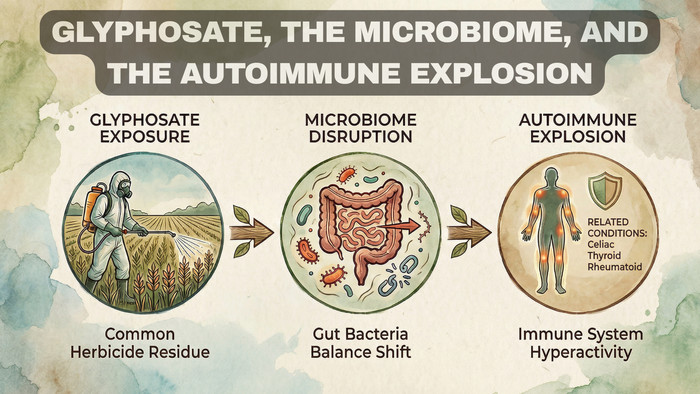
If glyphosate or other agricultural chemicals were used or residues were detected, we believe consumers should have meaningful access to that information.
The current federal system does provide a mandatory “bioengineered” disclosure for foods that meet USDA's specific definition, but that definition is not identical to everything consumers commonly mean when they say “GMO.” For example, the standard focuses on foods containing detectable modified genetic material.
Glyphosate is handled differently. EPA establishes legal residue tolerances, while FDA performs residue monitoring. In practice, that regulatory system is primarily about allowable residue levels and enforcement, not giving shoppers a simple front-of-package statement telling them whether glyphosate was used or detected.
Boost Blenz believes consumers should be given more information, not less.
Tell us what was used.
Tell us what was tested.
Tell us what is actually in the food.
Then allow us to make our own decision.
The Seed-Oil Question Is Bigger Than One Meal
There is another reason people care about this issue.
Dietary fats do not simply disappear the moment dinner is over.
Linoleic acid, an omega-6 fatty acid found at relatively high concentrations in many commonly used seed oils, can become incorporated into human adipose tissue.
Research examining adipose tissue has estimated the half-life of linoleic acid there at approximately 680 days, close to two years.
That does not mean a French fry sits inside your body for two years.
And it does not mean seed oil literally becomes lodged “in your bones.”
It means dietary fatty-acid patterns can be reflected in stored body fat over a very long period.
That makes ingredient transparency even more important.
If someone has decided that they want to reduce their intake of certain oils, they need to know what oil they are actually consuming.
Otherwise, what exactly is the point of an ingredient label?
Who Actually Did This?
There is one part of this story where we need to be careful.
UC Davis did not prove that executives at Siete, Boulder Canyon or the other companies intentionally ordered somebody to secretly replace avocado oil.
Researchers specifically acknowledged that adulteration could originate farther upstream with oil suppliers, brokers or other parts of the supply chain.
That distinction matters.
But it does not remove responsibility.
If your company puts “Avocado Oil” on the package, your company owns that claim.
Test your suppliers.
Test incoming ingredients.
Randomly test finished products.
Maintain traceability.
And if independent laboratories tell you that your product does not match your label, investigate immediately and tell your customers what happened.
“Our supplier told us it was avocado oil” is not sufficient quality control.
UC Davis researcher Selina Wang made essentially the same point: food companies could do more to monitor and verify the authenticity of the oils they purchase.
Exactly.
Your Company Owns That Claim
We Want Independent Testing
Boost Blenz believes the companies named in this testing should respond publicly.
Not with another advertisement.
Not with carefully written corporate language.
Not with a new package.
Show us the tests.
Test current production lots.
Use an independent laboratory.
Publish the fatty-acid and sterol results.
Identify the supplier.
Explain what happened.
Explain what changed.
That is transparency.
And until consumers receive satisfactory answers, they are completely justified in refusing to buy the products.
That is how the marketplace works.
If you lose our trust, you lose our money.
Should Refunds Be Required When Companies Lie?
There should be a serious conversation about refunds.
Consumers paid money based partly on an ingredient representation.
UC Davis noted that avocado-oil products frequently command prices comparable to or greater than products made with olive oil.
If a company sells a premium product based on a material ingredient claim and that claim is later proven false for a particular production lot, Boost Blenz believes affected consumers should be refunded.
100%.
And where investigators can actually prove intentional adulteration or intentional false advertising, penalties should be serious enough that deception is no longer profitable.
Otherwise, what incentive is there to change?
NOW IT'S TIME TO CLEAN HOUSE
We cannot control everything that has already entered our food supply. We cannot go back and change every meal we ate while trusting labels that may not have told the full story.
But we can decide what happens next.
Now is the time to clean up what we eat, support the body's natural detoxification systems, drink clean water, eat real food, move, sleep, and give the liver, kidneys, and digestive system the nutritional support they need to do their jobs.
At Boost Blenz, that is what detox means.

It is not about fear. It is about taking responsibility for what comes next.
We need our bodies functioning well. We need clear minds. We need energy. We need focus. And we need people healthy enough to keep asking questions and demanding answers from companies that think consumers will simply forget.
We are not forgetting.
If corporations mislead us about what is in our food, we demand accountability. If testing exposes a problem, we demand answers. If labels are wrong, we demand they be corrected.
And while we fight for a cleaner, more transparent food system, we also take responsibility for ourselves.
Clean up the diet. Support your natural detoxification systems. Know your ingredients. Question the label. Demand proof.
Because the healthier, sharper, and more informed we become, the harder we are to deceive.