Black walnut, wormwood, and clove have been used in traditional herbal practices for generations.
Long before modern petrochemical medicine, people were already using these plants for digestive problems, worms, and other issues they associated with parasites.
Today, all three are still common ingredients in natural parasite detox and parasite cleanse formulas.
Key Takeaways
Black Walnut
Black walnut has a long history in Western herbal medicine.
The green hull contains compounds such as juglone, tannins, and polyphenols.
Traditional herbalists used black walnut preparations for intestinal worms, and modern researchers have studied compounds from walnut species against certain protozoan parasites.
Wormwood
Sweet wormwood, or Artemisia annua, is one of the strongest examples of traditional herbal knowledge.
It has been used in Chinese herbal medicine for more than 2,000 years.
Researchers later isolated artemisinin from the plant.
Artemisinin became one of the world's most important medicines for malaria, a parasitic disease.
Research has also examined Artemisia compounds against parasites including Giardia, Leishmania, Schistosoma, Toxoplasma, Cryptosporidium, Babesia, and Trypanosoma.
From Traditional Herb to Nobel Prize
Clove
Clove contains a powerful plant compound called eugenol.
Eugenol has been studied for antimicrobial, antifungal, and antiparasitic activity.
Researchers have examined clove and eugenol against parasites including Giardia, Schistosoma, Fasciola, and Haemonchus.
Why Use Them Together?
Each plant has a different chemical profile.
Black walnut contains juglone and tannins.
Wormwood contains artemisinin and other plant compounds.
Clove contains eugenol.
Traditional herbalists often combine them because each plant brings something different to the formula.
Each Plant Brings Something Different
Traditional Knowledge Came First
People used herbs long before scientists could isolate individual molecules.
They learned through observation and passed that knowledge down.
Modern science came later and started identifying why some of those plants may have worked.
Wormwood is a perfect example.
People used the plant for centuries before researchers discovered artemisinin.
That discovery eventually led to a Nobel Prize.
Why Doesn't Pharma Study More Whole Herbs?
One major reason is economics.
Drug trials are expensive, and pharmaceutical companies usually want strong patent protection before investing millions of dollars.
Naturally occurring plants are harder to patent.
A company can sometimes patent an extraction method, synthetic derivative, formulation, or specific use, but it cannot simply own black walnut, wormwood, or cloves.
That can reduce the financial incentive to spend large amounts of money studying common plants.
Pharmaceutical companies do study natural compounds, and many modern medicines originally came from nature.
But patentability can influence which substances receive the most investment.
That is worth understanding.
Naturally Occurring Plants Are Harder to Patent
Boost Blenz Parasite Cleanse
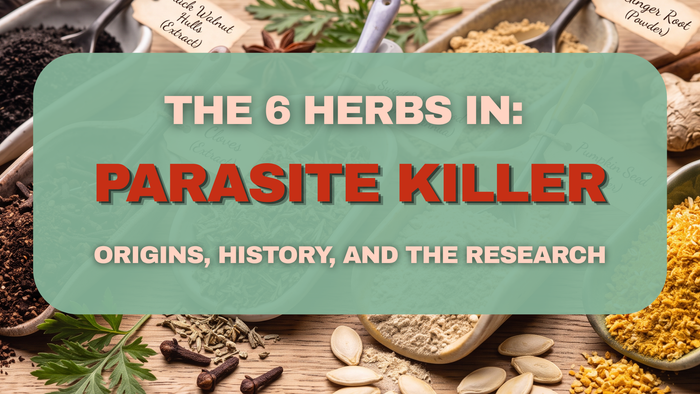
The Boost Blenz Parasite Cleanse uses five traditional botanical ingredients:
Green-black walnut hull extract, Contains juglone, tannins, and other compounds studied for antiparasitic activity.
Sweet wormwood (Artemisia annua), Contains naturally occurring compounds, including artemisinin, that have been investigated for their effects on parasites.
Clove extract, Rich in eugenol, a compound studied for antimicrobial and antiparasitic properties.
Pumpkin seed powder, Traditionally used for intestinal worms. Experimental research on pumpkin seed extracts has demonstrated effects on parasite eggs, larvae, and adult worms.
Ginger root, Traditionally used to support digestion and digestive comfort. Its bioactive compounds are also being investigated for antimicrobial activity.
Together, these five ingredients provide a variety of naturally occurring plant compounds. research has demonstrated activity against different parasite life stages in experimental settings, the complete formula eliminates every stage of a parasitic infection and disrupts parasite biofilms in humans.

Don't Forget the Binder!
The Boost Blenz Binder contains activated charcoal, a highly porous material that can bind certain substances in the digestive tract.