Susy was living a normal American life. She woke up tired, grabbed her coffee, rushed out the door, worked all day, came home, made dinner, scrolled her phone, went to bed, and did it all again the next day. Nothing about her life felt unusual.
Key Takeaways
Then one morning, something changed. Her stomach felt off. Not emergency-room off. Not doubled-over-in-pain off. Just wrong. A little bloated. A little crampy. A little uneasy.
She told herself it was probably something she ate. Maybe the coffee. Maybe the takeout from the night before. Maybe stress. So she ignored it. Most people do.
But then it kept happening. One day her stomach was loud and gassy. The next day she had loose stool. Gross, she thought. Then came the bloating after meals, then the fatigue, then the weird food reactions. Foods she used to tolerate suddenly made her feel heavy, swollen, and uncomfortable.
Her stomach started running her life. She had to think about where the bathroom was. She had to think about what she ate before leaving the house. She had to think about whether coffee would set her off. She had to think about whether dinner with friends was worth the risk.
That is when Susy entered the modern gut-health maze. First, she blamed dairy, so she cut dairy. Nothing changed. Then she blamed gluten, so she cut gluten. A little better for a few days, then back to the same problem. Then she blamed sugar, then coffee, then seed oils, then stress, then hormones, then age, then anxiety.
Then she started buying supplements. Probiotics. Digestive enzymes. Fiber powders. Greens powders. Electrolytes. Gut health drinks. Anything that promised to fix digestion. But nothing really fixed it. Some things helped for a day or two, some made her worse, most did nothing.
So Susy finally went to the doctor. The first visit was simple. “Sounds like IBS.” That was the first label. Irritable bowel syndrome. It sounded official, but it did not explain much.
Why did this start suddenly? Why was she bloated all the time? Why did her stool change? Why was she exhausted? Why did she feel like something was taking from her body?
She left with advice she had already heard. Eat more carefully. Manage stress. Try fiber. Avoid trigger foods. Drink more water.
So she tried. She tracked her meals. She wrote down symptoms. She cut out more foods. She ate smaller meals. She skipped breakfast. She stopped eating late. She became afraid of food. Still, her stomach did not feel right.
Then came the second doctor, then the third, then the fourth, then the fifth. Bloodwork. Allergy testing. Food sensitivity panels. More diet changes. More explanations that did not explain anything.
At one point, Susy had a list of foods she was avoiding that was longer than the list of foods she could eat. She was told it could be IBS. It could be stress. It could be anxiety. It could be gut sensitivity. It could be inflammation. It could be hormones. It could be her nervous system. But nobody asked the question that would eventually matter most.
Could this be a parasite?
Not one person had brought it up. Not at the beginning. Not after the diet changes failed. Not after the allergy tests. Not after the stomach issues dragged on. Not after the fatigue got worse. Not after she started feeling like her body was no longer her own.
Then one night, Susy sat at her kitchen table with her laptop open. Her stomach was bloated again. She was tired. She was frustrated. She typed in her symptoms. Bloating. Diarrhea. Gas. Fatigue. Stomach cramps.
That was when she saw the word she had not been looking for. Parasite.
At first, she almost laughed. A parasite? In America? That sounded ridiculous. Then she kept reading.
Parasites can spread through contaminated water. They can spread through food. They can spread through surfaces. They can spread through close contact. They can spread in places where microscopic contamination is easy to miss. They can affect digestion. They can irritate the gut. They can leave people bloated, drained, nauseous, uncomfortable, and confused about what is happening inside their own body.
Suddenly, Susy was not laughing. She was furious. How had she been to five specialists and no one had even mentioned this? How had she spent months blaming herself, blaming food, blaming stress, and blaming her body when something could have been living inside her gut the entire time? Why had she been handed the IBS label so quickly? Why had parasites never been part of the conversation?
That was the moment the story changed. Susy pushed for stool testing. And there it was.
Giardia.
Not a mystery, a common parasite. Not “just IBS.” Not all in her head. Not her fault. She had been living with a parasite.
Think about what that does to a person mentally. For months, Susy thought her body was broken. She thought she was weak. She thought she was becoming sensitive to everything. She thought she had to live with a gut condition forever.
But her body was not broken. Her body was reacting. Something was in her digestive system that did not belong there. That is a very different story.
Once Susy finally had an answer, she changed her entire approach. She stopped feeding the problem. The sugar-heavy coffee drinks had to go. The processed snacks had to go. The fake food had to go. The constant grazing had to go.
She focused on real food. Simple meals. Clean protein. Minerals. Hydration. Bitter herbs. Digestive support. Gut movement. Elimination.
She started thinking about her body differently. Not as a broken machine. As terrain. And if the terrain inside the gut is weak, sluggish, sugar-heavy, and overloaded, unwanted organisms have an easier time thriving. That does not mean food alone is the answer to every parasite infection. It means the internal environment matters.
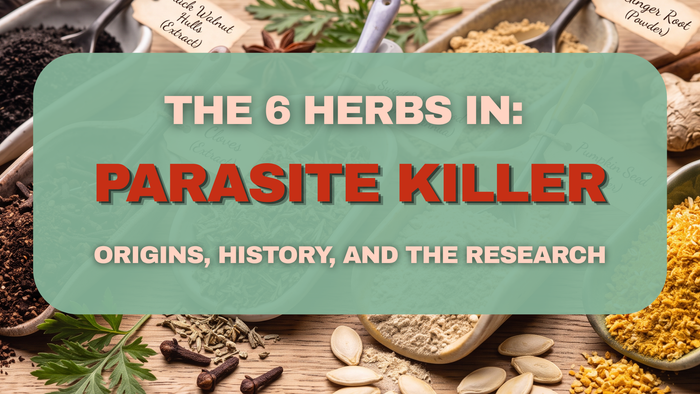
Susy also started learning about traditional parasite cleansing herbs.
- Green-Black Walnut Hulls.
- Sweet Wormwood.
- Cloves.
- Pumpkin Seed.
- Ginger Root.
- Orange Peel.
These herbs have been used in traditional cleansing routines for generations.

Not because people were stupid back then. Because they paid attention. They understood that the gut matters. They understood that elimination matters. They understood that bitter plants, cleansing herbs, and digestive support had a place in human health long before modern labels took over the conversation.
And that is the real issue. Susy was not angry because she had a parasite. She was angry because no one told her it was possible. She was angry because parasites are treated like some rare foreign problem. She was angry because she was handed a vague label before anyone looked deeper. She was angry because she had spent months suffering, changing her diet, fearing food, buying supplements, and wondering what was wrong with her. All while the real issue was hiding in plain sight.
It is not your fault, Susy. You were not crazy. You were not weak. Your body was not randomly falling apart. You did not “just have IBS.”
You had a parasite.
Don't suffer like Susy.